
सेक्स हार्मोन परीक्षण को अक्सर प्रजनन क्षमता से जोड़कर देखा जाता है, लेकिन इसका प्रभाव एक महिला के पूरे जीवन पर पड़ता है।
इस अंतर्राष्ट्रीय महिला दिवस पर, पॉकलाइट यह संस्था विश्वभर की महिलाओं के लचीलेपन और जटिल जैविक संरचना का सम्मान करती है। हमारा मानना है कि देखभाल का उच्चतम रूप यही है। शुद्धता हम हर महिला को उसके शरीर को उसके हर पड़ाव पर समझने के लिए आवश्यक जानकारी प्रदान करते हैं। हमारा उद्देश्य जटिल नैदानिक प्रश्नों को स्पष्ट और त्वरित उत्तरों में बदलना है।
हार्मोनल असंतुलन का अक्सर सही निदान नहीं हो पाता, जिससे प्रजनन संबंधी समस्याओं से परे दीर्घकालिक स्वास्थ्य जोखिम उत्पन्न होते हैं। इन कमियों को दूर करना महिलाओं के समग्र स्वास्थ्य की दिशा में पहला कदम है।
● शीघ्र पता लगाने के पक्ष में तर्क: पॉलीसिस्टिक ओवरी सिंड्रोम (पीसीओएस) यह प्रजनन आयु की 13% महिलाओं को प्रभावित करता है। विश्व स्वास्थ्य संगठन (डब्ल्यूएचओ) इनमें से लगभग 70% मामले वैश्विक स्तर पर निदान रहित रह जाते हैं, जिसके कारण अक्सर अनियंत्रित चयापचय संबंधी जोखिम उत्पन्न होते हैं।
● परिवर्तन: 2030 तक, अनुमानित 1.2 अरब महिलाएं रजोनिवृत्ति के दौर से गुजर रही होंगी। स्रोत: नॉर्थ अमेरिकन मेनोपॉज़ सोसाइटी एस्ट्रोजन के स्तर में गिरावट की सटीक निगरानी के बिना, निम्नलिखित जैसे जोखिम उत्पन्न हो सकते हैं: ऑस्टियोपोरोसिस (जो 50 वर्ष से अधिक उम्र की हर 3 में से 1 महिला को प्रभावित करता है) अंतर्राष्ट्रीय ऑस्टियोपोरोसिस फाउंडेशन ) अक्सर फ्रैक्चर होने तक इसका पता नहीं चल पाता है।
नैदानिक निगरानी और जोखिम न्यूनीकरण
जीवन का चरण / नैदानिक लक्षण |
अनुशंसित परीक्षा आवृत्ति |
प्रमुख बायोमार्कर |
नैदानिक उद्देश्य (जोखिम कम करना) |
किशोरावस्था (यौवन विकास) |
बेसलाइन स्क्रीनिंग (वार्षिक फॉलो-अप) |
एफएसएच, एलएच, एस्ट्रैडियोल (ई2) |
यौवनारंभ की प्रगति की निगरानी करने और समय से पहले यौवनारंभ या अंतःस्रावी चयापचय संबंधी परिवर्तनों के शुरुआती लक्षणों का पता लगाने के लिए। |
निवारक स्वास्थ्य (18-35 वर्ष की आयु) |
हर 1 से 2 साल में |
एएमएच, टेस्टोस्टेरोन, प्रोलैक्टिन (पीआरएल) |
लक्षणहीन पॉलीसिस्टिक ओवरी सिंड्रोम (पीसीओएस) की जांच करने और दीर्घकालिक चयापचय संबंधी विकारों के जोखिम को कम करने के लिए। |
प्रजनन क्षमता और परिवार नियोजन |
चक्र-विशिष्ट ट्रैकिंग |
एएमएच, प्रोजेस्टेरोन, एलएच |
अंडाशय की क्षमता का आकलन करने और ओव्यूलेशन की गुणवत्ता की पुष्टि करने के लिए, जिससे अनजाने में होने वाली बांझपन का खतरा कम हो जाता है। |
रजोनिवृत्ति के आसपास का चरण (35-50 वर्ष की आयु) |
हर 6 से 12 महीने में |
एफएसएच, एस्ट्रैडियोल (ई2), एएमएच |
समय से पहले डिम्बग्रंथि की अपर्याप्तता (पीओआई) की पहचान करना और अचानक हार्मोनल गिरावट को रोकने के लिए संक्रमण का प्रबंधन करना। |
रजोनिवृत्ति के बाद (50 वर्ष से अधिक आयु) |
वार्षिक रूप से (वृद्धावस्था संबंधी जांच का एक भाग) |
एफएसएच, एस्ट्रैडियोल (ई2) |
एस्ट्रोजन की कमी की निगरानी करने और ऑस्टियोपोरोसिस और हृदय संबंधी जटिलताओं के जोखिम को कम करने के लिए। |
उपलब्ध एच हे आर एम हे एन ई एफ ई आर टी मैं एल मैं टी वाई मार्करों पर जी एल ए एन सी ई :
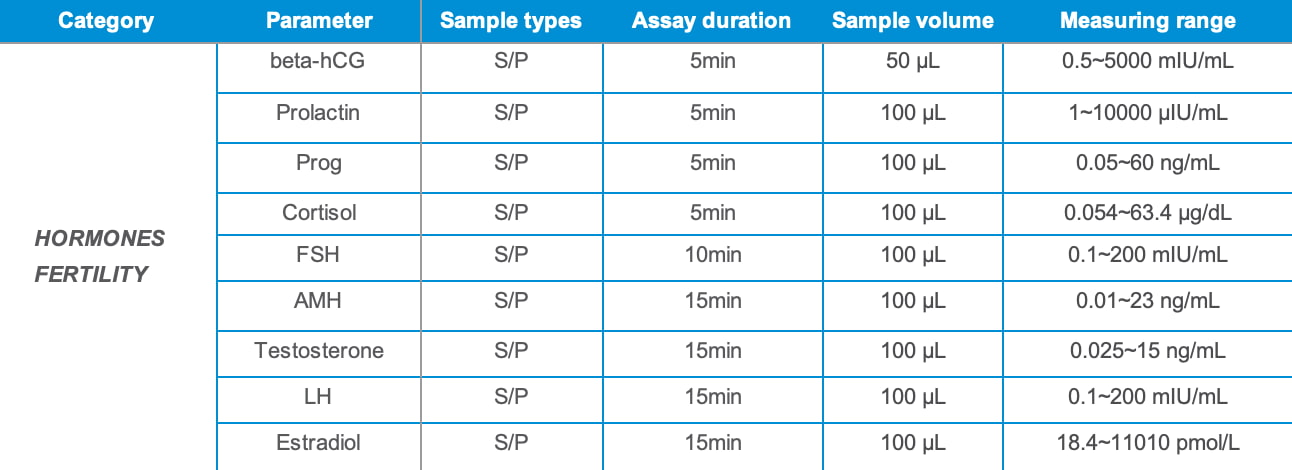
हमारे बारे में और अधिक जानें समाधान :
एंटी-मुलरियन हार्मोन (एएमएच) टेस्ट किट
1. कम नमूने की मात्रा और त्वरित परिणाम
केवल 50 μL सीरम या प्लाज्मा की आवश्यकता होती है, और परिणाम 5 मिनट में मिल जाता है, जो त्वरित नैदानिक निर्णयों के लिए आदर्श है।
2. फ्रीज-ड्राइड अभिकर्मक: कोल्ड चेन की आवश्यकता नहीं, 18 महीने की शेल्फ लाइफ, भंडारण और परिवहन को सरल बनाते हैं।
3. उच्च सटीकता और उत्कृष्ट परिशुद्धता (सीवी < 5%)
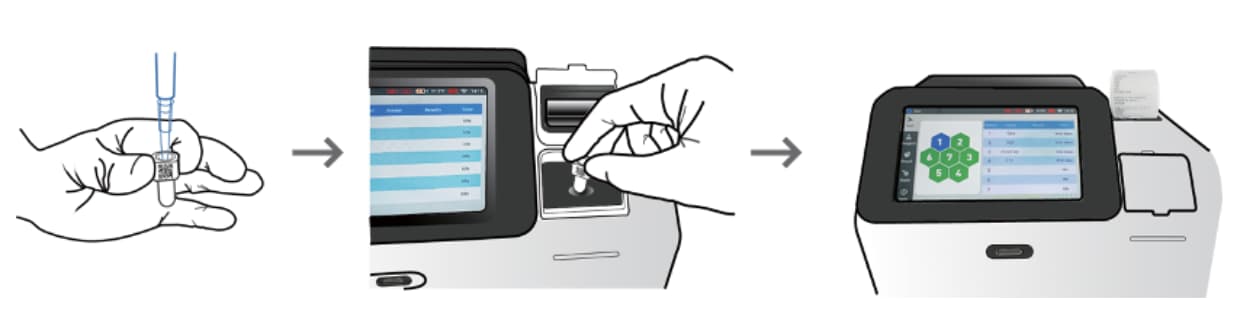
4. इसके साथ लागू C5000 POC CLIA विश्लेषक : तीन चरणों में संचालन, रखरखाव-मुक्त
भागीदार बनें / कोटेशन का अनुरोध करें
क्या आप विकेंद्रीकृत प्रतिरक्षा विज्ञान में क्रांति का नेतृत्व करने के लिए तैयार हैं? हम वितरकों और स्वास्थ्य सेवा पेशेवरों को हमारे व्यापक दृष्टिकोण का पता लगाने के लिए आमंत्रित करते हैं। डी मैं ए जी एन हे एस टी मैं सी पैनलों .



 IPv6 नेटवर्क समर्थित | XML | साइट मैप | ब्लॉग | गोपनीयता नीति
एक संदेश छोड़ें
वीचैट पर स्कैन करें :


 English
 français
 русский
 español
 português
 العربية
 日本語
日本語 Türkçe
 हिंदी
हिंदी Indonesia